Holistic Practices
Sound Healing in Lombok: A Gentle Guide to Singing Bowls, Gongs & Deep Rest
Sound healing uses vibration, tone, resonance and attentive listening to support relaxation, presence and nervous-system downshifting. Some sessions feel like an immersive sound bath. Others are more therapeutic and intimate, using singing bowls or gongs around one person lying down in stillness.
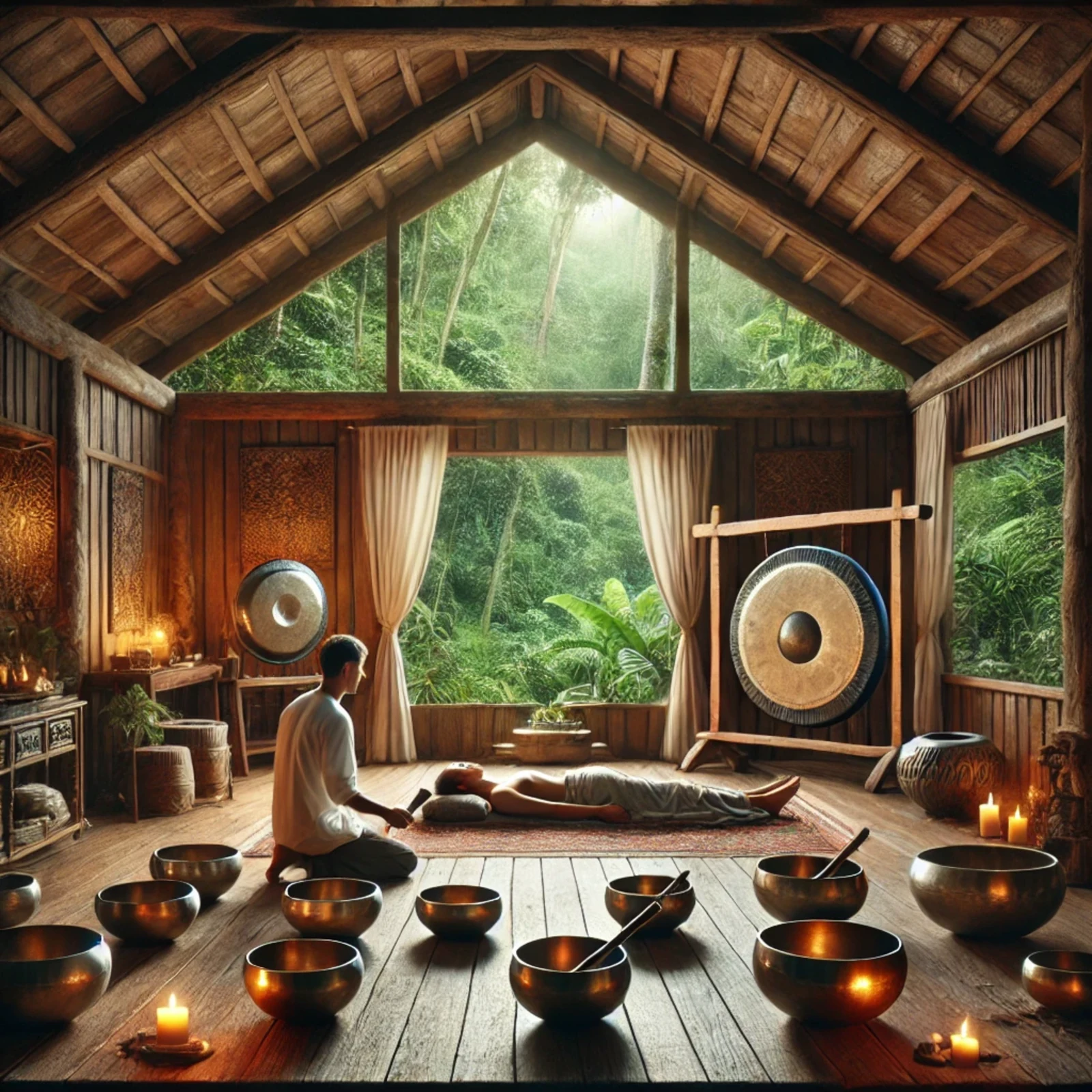
At its simplest, sound healing is the intentional use of sound and vibration in a therapeutic or contemplative setting. The session may include crystal bowls, Himalayan bowls, gongs, chimes, drums, voice or other resonant instruments. The invitation is often to lie down, soften and let listening become a form of meditation.
A useful distinction
Different ways this practice can be experienced
Group sound bath
- Usually held with several participants
- You mostly receive and rest
- Can feel immersive and ceremonial
- A beautiful entry point if you are curious
1:1 sound healing session
- More personal and often more tailored
- May use bowls on or around the body
- Can include a short intake or intention setting
- Useful if you want a quieter or more focused experience
Guide section
What sound healing actually means
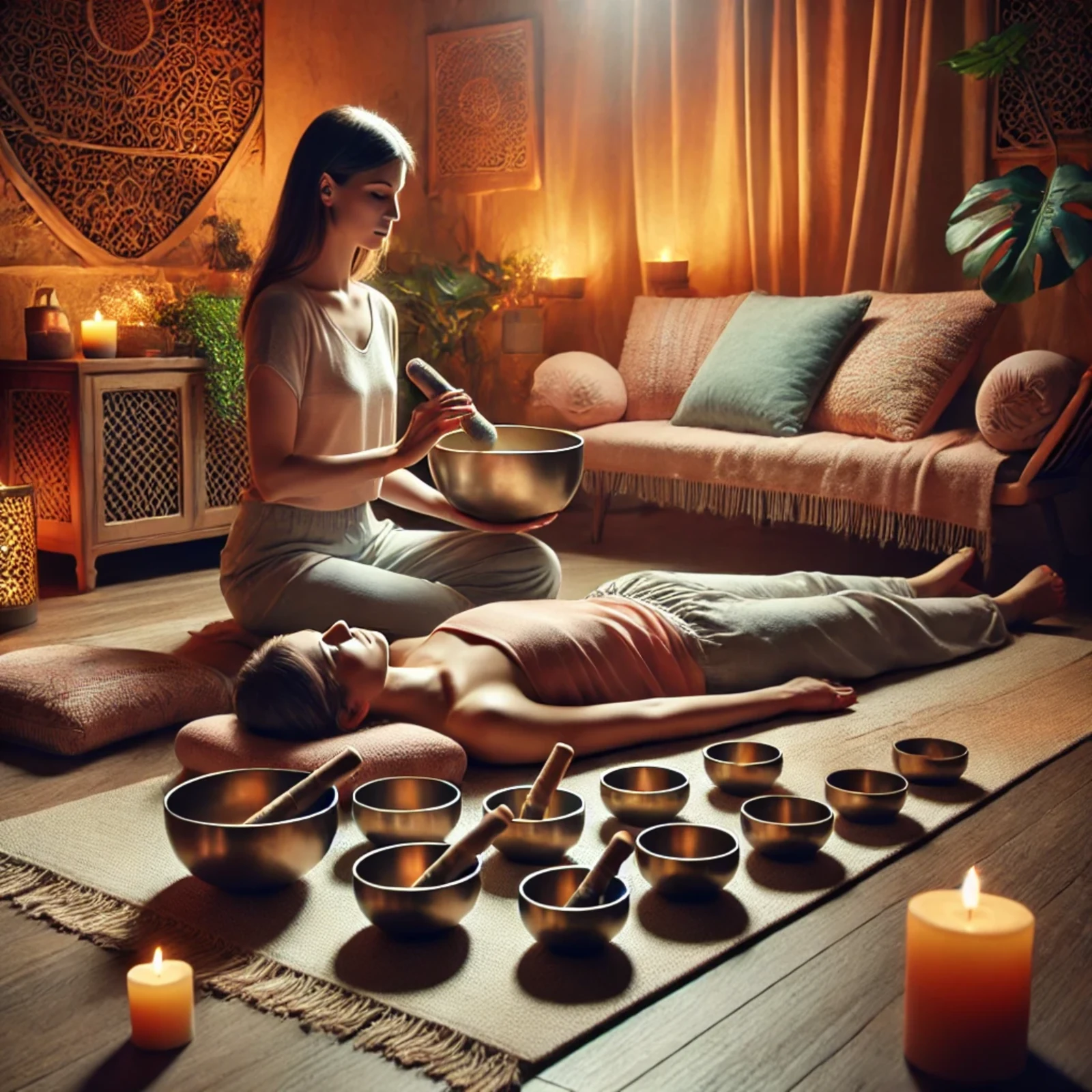
Different practitioners use the term differently. In some spaces, sound healing refers to a meditative “sound bath” where you are surrounded by layers of resonance and invited into deep rest. In other settings, it refers to a more one-to-one experience in which singing bowls, gongs or chimes are used with more therapeutic intention.
What these approaches share is the understanding that sound affects us physically and emotionally. Tone, volume, repetition and vibration can influence how the body feels. Even when the session is simple, the effect can be surprisingly deep because you are not being asked to “do” much. You are being asked to listen, receive and rest.
Guide section
Common instruments and atmospheres
Singing bowls tend to feel clear, spacious and soothing. Gongs can feel expansive, wave-like and immersive. Chimes, drums and voice can add movement, texture and ritual. Some sessions happen in yoga shalas, jungle spaces or dedicated therapy rooms. Others are part of community evenings or retreat programmes.
The aesthetic beauty of a session can be lovely, but what matters more is how held and comfortable you feel. A good sound healer creates a clear container, keeps the volume appropriate, and respects the fact that not everyone responds to sound in the same way.
Guide section
What to expect in a session
Most sessions begin with a short welcome or intention-setting moment. You may lie on a mat with cushions and a blanket, or in a 1:1 setting you may receive the sounds while resting on a massage table or mat. Then the instruments are played. The experience can feel like being bathed in waves of tone and vibration.
Some people feel immediately relaxed. Others become emotional, sleepy, dreamy or mentally quiet. Sometimes the value lies in the simplest outcome: you slow down enough to actually feel your body again. Afterwards, it helps to drink water, move gently and give yourself a little space before rushing into the next thing.
Guide section
Why people are drawn to sound healing
People often seek sound healing when they are overstimulated, mentally busy or craving a softer doorway into stillness. It can be appealing if silent meditation feels too difficult, because sound gives the mind something to rest with.
Many participants describe feeling calmer, more grounded or more spacious afterwards. Others use it as a supportive complement to yoga, breathwork, massage or retreat work. Rather than guaranteeing a fixed outcome, sound healing is best approached as a restorative, sensory practice that can support rest and inner listening.
Helpful mindset
Three simple ways to get more from a session
Come with a simple intention
You do not need to force a big goal. A simple intention such as “I want to soften,” “I want clarity,” or “I want to listen” is enough.
Choose the right format
If you are new, start with a gentler or more introductory format rather than the most intense-sounding option.
Give yourself integration time
Try not to schedule something rushed immediately afterwards. Water, rest, walking or journaling can help the experience settle.
Why people come
What people often appreciate about sound healing
Safety & care
Important notes before you book
If you are very sensitive to sound, get migraines, have tinnitus or become easily overstimulated, ask about the format before joining. Some people prefer smaller bowls over louder gong work.
If you are coming with a medical condition, treat sound healing as a complementary wellness experience rather than a replacement for professional care. You are always allowed to sit up, step out or request a gentler approach.
Explore locally
Sound healing in Lombok
These facilitator profiles may be helpful starting points if you want to explore this practice around Lombok. Please always confirm current schedules, training, prices and session details directly with the facilitator.
Cocoon Healing Lombok
Kuta Lombok
A small sanctuary on a hill of the beautiful island of Lombok. Our peaceful retreat venue offers everything you need for relaxation, healing and growth.
Ashtari Yoga & Retreat
Kuta Lombok
Welcome to Ashtari Yoga in Kuta Lombok! Daily yoga classes, retreats, teacher trainings and private holistic services in a beautiful hillside sanctuary with sea views.
Shanti Yoga Lombok
Kuta Lombok
Welcome to Shanti Yoga Lombok at Jivana Resort. We provide yoga classes, private sessions, retreats, sound healing and cacao ceremonies in a lush tropical setting.
FAQ
Common questions
Do I need any experience before joining a sound bath?
No. Sound healing is often beginner-friendly. You mainly need curiosity and the willingness to rest and listen.
What if I am sensitive to loud sound?
Ask about the instruments and volume beforehand. You may prefer smaller bowls or a quieter 1:1 setting over a louder gong journey.
Is sound healing the same as music therapy?
Not necessarily. Some practitioners borrow similar ideas, but most sound healing sessions in wellness spaces are restorative experiences rather than formal clinical therapy.
Holistic Tribe Lombok
Why we publish guides like this
Holistic Tribe Lombok is a non-profit community initiative. Alongside facilitator profiles and events, we want to share grounded, quality information that helps people make more conscious and respectful choices around holistic practices.